
How to Trust God When You Can’t See What’s Ahead
Sometimes you simply don’t know what’s coming next.
A job changes or a relationship feels uncertain. An answer you’ve prayed for still hasn’t come. You know you should trust God, but that can feel much easier to say than to do.
You want to know what God is doing. or some reassurance that everything will work out the way you hope. Yet God doesn’t always give us the whole plan.
Trusting God isn’t about pretending you aren’t afraid. Instead, it’s learning to rest in His character when you don’t have all the answers.
You may not know what comes next, but you can know the One who does.
What Trusting God Actually Means
Biblical trust means relying on God’s Word and character when your circumstances leave questions unanswered.
It isn’t blind optimism. Trust also doesn’t guarantee that life will unfold exactly as you hoped.
Instead, trust begins with remembering who God is.
When you don’t understand what He’s doing, you can remember what you already know about Him. His Word is true. His character doesn’t change. Therefore, you don’t need to understand tomorrow before you can trust Him today.
Follow God One Step at a Time
In Genesis 12:1-3, God told Abram to leave his country and go to a land He would show him.
God gave Abram a promise, but He didn’t give him a detailed route or timeline. He didn’t tell him how long the journey would take or what he’d find when he got there.
Still, Abram went.
That’s often the difficult part of trusting God. We want to see where He’s taking us before we’re willing to move.
Maybe for you, that looks like staring at a job offer and wondering whether saying yes is the right decision. You can’t possibly know what that choice will mean for your family a year from now.
Or maybe it’s the conversation you keep rehearsing in your head but haven’t had. You don’t know how the other person will respond.
God may not show you the entire road ahead. However, He can show you what faithfulness looks like today.
Sometimes that means making a phone call you’ve been avoiding. Maybe it’s having an honest conversation or finally resting instead of pushing yourself harder.
You don’t have to figure out everything at once. Ask God what He wants you to do today. Then trust Him with what comes after that.
Remember Why God Is Worthy of Your Trust
Abram could follow without knowing the whole plan because the One leading him was trustworthy. Psalm 33 helps us understand why.
Psalm 33:4 says: “For the word of the Lord is right and true; he is faithful in all he does.”
The psalm points us toward the character of the One we’re trusting. God spoke creation into being, and His plans remain firm even when ours change.
And ours can certainly change quickly.
An unexpected phone call can rearrange your afternoon. A car repair you didn’t budget for can throw off your whole month. Sometimes one conversation changes everything you thought you knew about a relationship.
Yet God doesn’t change with your circumstances. That’s why praise matters when the future feels uncertain.
Worship turns your attention away from everything you cannot predict. Instead, it reminds you of the God whose character remains steady.
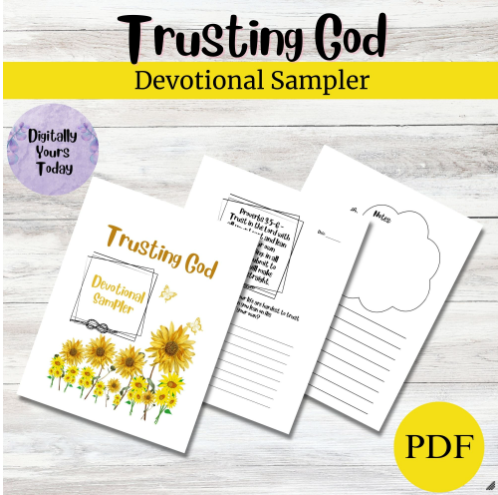
Trusting God Devotional Sampler
Don’t let the struggles of life keep you from knowing and seeing what God wants you to learn.
Spend time with God and His Word each day.
Trust God’s Promises When Circumstances Say Otherwise
Romans 4 brings us back to Abraham many years after his first call.
By then, Abraham had been waiting for God to fulfill His promise. From a human perspective, his circumstances made that promise seem impossible.
Yet Romans 4:20-21 tells us that Abraham remained convinced God could do what He had promised.
His confidence wasn’t in his circumstances. It was in God.
That’s an important distinction when you’re waiting for an answer. Faith doesn’t require you to pretend everything looks promising. You can acknowledge that something is difficult while still believing God is faithful.
Don’t Confuse Control With Trust
When you can’t see what’s ahead, it’s tempting to try to regain control.
You replay conversations in your mind. You consider every possible outcome. Then you try to find the one perfect decision that will guarantee everything works out.
Unfortunately, control can’t give you the certainty you’re looking for.
God offers something better. He invites you to depend on Him.
You can plan wisely and ask questions. You can seek godly counsel before making an important decision. Then you can place the outcome back into God’s hands.
When you find yourself trying to control what happens next, ask yourself two questions:
What is mine to do today?
What do I need to place back in God’s hands?
The first helps you recognize your responsibility. The second reminds you where your responsibility ends.
Don’t Wait Until You Feel Fearless
Abram didn’t have every detail when he left home. Likewise, faith doesn’t always feel courageous.
Sometimes you take the next step while your stomach is still in knots. You pray even though you’re worried. You obey even though you aren’t sure what will happen afterward.
Fear doesn’t automatically mean you aren’t trusting God.
Instead of waiting until you feel completely confident, ask God for enough courage to obey Him today. Then act on what He has made clear.
Let Your Faith Lead to Action
We see this same pattern in Matthew 9.
Jesus calls Matthew, and Matthew gets up and follows Him.
Later, a synagogue leader comes to Jesus and tells Him that his daughter has just died. On the way, a woman who has suffered for twelve years reaches out to touch Jesus’ cloak.
Their circumstances are very different. However, each person responds to Jesus based on what they believe about Him. Their faith moves them toward Him.
Bring What You Cannot Fix to Jesus
The synagogue leader couldn’t fix what had happened to his daughter. The woman had lived with her suffering for years.
Both brought situations beyond their control to Jesus.
You can do the same. Trusting Jesus doesn’t mean you can demand a particular outcome from Him. It means you can bring Him the things you cannot fix.
Tell Him what you’re afraid will happen. Tell Him what you desperately want Him to change.
You don’t need polished words. God already knows what’s happening, so you can speak honestly with Him.
Prayer isn’t about convincing God to follow your plan. Instead, you can honestly bring Him what you cannot control and entrust it to His care.
Take the Next Faithful Step
Matthew didn’t know everything that would happen after he left his tax collector’s booth. He simply responded when Jesus called.
Sometimes we delay obedience because we’re waiting for certainty. We tell ourselves we’ll move forward once we know how everything will turn out.
Yet faith often works the other way around. God shows us what to do next, and we trust Him enough to do it.
Your next step may seem small. Maybe it’s sending the text you’ve been putting off or making an appointment you keep rescheduling. Small acts of obedience still matter.
You aren’t responsible for controlling what happens afterward. Your responsibility is to faithfully respond to what God has made clear.
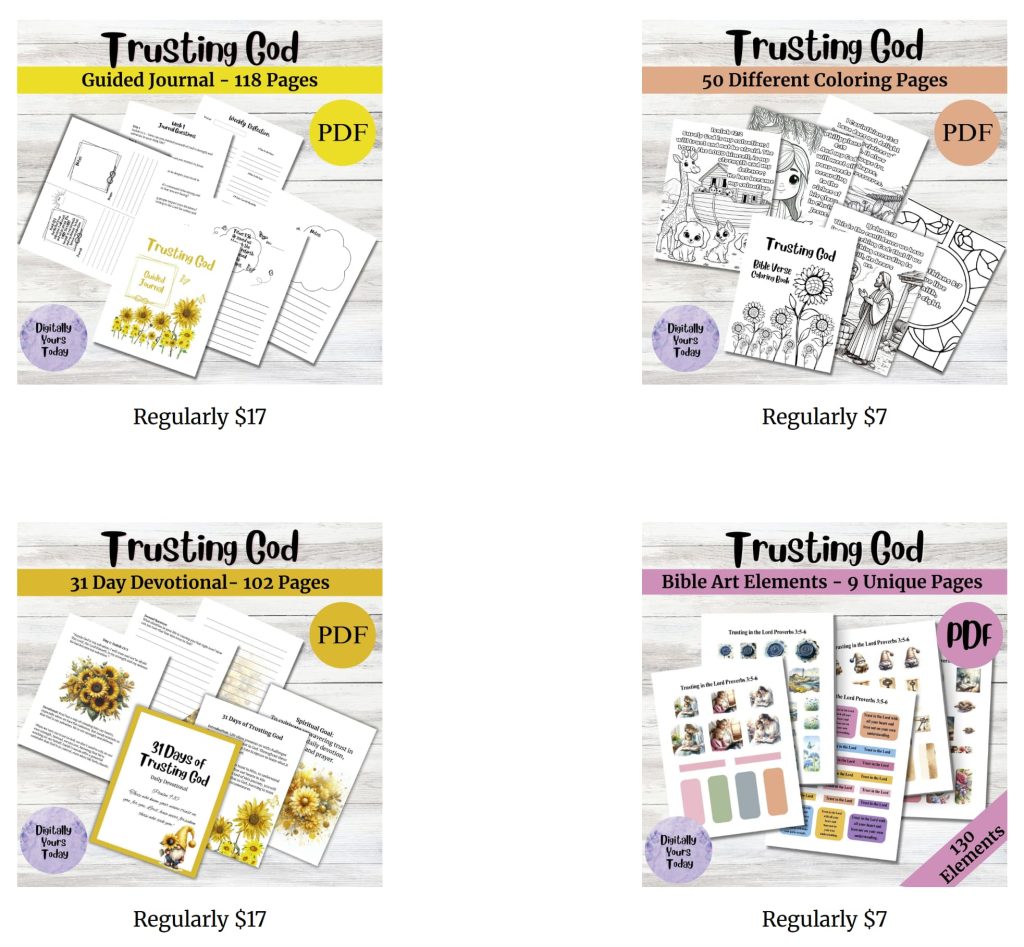
Trusting God 4-in-1 Bundle
With a guided journal, coloring pages, Bible art elements, and a devotional, you get everything you need to deepen your faith, reflect on Scripture, and creatively express your spiritual journey—all in one convenient package.
A Simple Daily Rhythm for Trusting God
Trust grows through ordinary moments with God.
You don’t need an hour-long morning routine before you can begin. Even a few intentional minutes at the kitchen table can help redirect your thoughts toward Him.
Start Your Day With God’s Word
Before your day gets moving, read a few verses.
Then ask yourself: What does this passage remind me about God?
Instead of beginning with everything you need God to do, begin with who He is. Remembering His character gives you a foundation for whatever the day brings.
Tell God What You’re Carrying
You don’t need to hide fear or disappointment from God.
Tell Him what’s weighing on you. If you’re confused, say so. If you’re tired of waiting, tell Him that too.
Then ask God for wisdom about what you need to do today. A short, honest prayer is enough.
Act on What God Has Made Clear
You don’t have to solve the entire situation today. Instead, consider what God has already made clear.
Is there something you need to do?
Maybe you need to make a decision you’ve been postponing. Perhaps you need to apologize, ask for help, or simply wait instead of forcing an answer.
Do what you know to do today and trust God with what you don’t yet know.
Surrender What You Cannot Control
Finally, name the part you can’t control. You might pray:
“Lord, You know what this day holds. Show me what You want me to do today. Help me obey You in what You’ve made clear and trust You with everything I cannot see.”
Then, when your mind starts trying to solve tomorrow again, return to that prayer.
You may need to surrender the same concern more than once. That’s okay. Trust grows as you keep bringing it back to God.
You Don’t Have to See Ahead to Trust God
You may still have questions tomorrow. The decision may still be difficult, and the answer you’ve been waiting for may not come as quickly as you’d like.
But trusting God doesn’t require you to see the whole road ahead.
Ask Him to show you what faithfulness looks like today. Then follow where He leads and trust Him with what you still cannot see.
Interested in Bible Journaling?

Grab the FREE “Loved By God” – John 3:16 Bible Art Elements
Here are some other posts you might like: