True Contentment in God
Your calendar is full. Your phone keeps buzzing. And someone always needs something.
You can love your family, take your faith seriously, and still feel a quiet restlessness underneath it all. It’s that feeling that you’re doing so much, yet your heart won’t settle.
That’s where finding true contentment in God becomes more than a nice idea. It becomes a spiritual need. Contentment isn’t about getting a lighter load or finally “arriving.” It’s about a steady peace that holds up in stress, loss, and even success. Not because life becomes easy, but because God stays the same.
“You will keep in perfect peace those whose minds are steadfast, because they trust in you.” (Isaiah 26:3).
God makes something very clear: He is the only One who satisfies. Everything else eventually runs dry. So, what is contentment, what steals it, and how do we return to God when our hearts feel restless?
What Is True Contentment (And What It Is Not)
“But godliness with contentment is great gain. For we brought nothing into the world, and we can take nothing out of it. But if we have food and clothing, we will be content with that.” (I Timothy 6:6–8).
True contentment is settled trust in God, even when circumstances feel unsettled. It does not require perfect conditions. It does not deny pain. It simply means your heart is no longer ruled by the constant questions: Do I have enough? Am I enough? Will everything be okay?
Your Christian purpose is rooted in grace and shaped by relationship with God. This matters because so many women quietly believe their purpose depends on their performance. But it doesn’t.
In Jeremiah 2, God describes what happens when His people chase other sources of security. They leave Him, “the fountain of living water,” and try to live off “broken cisterns” that cannot hold water (Jeremiah 2:13).
Jesus later echoed this same truth when He said, “Everyone who drinks of this water will be thirsty again…” (John 4:13–14).
That is a powerful picture of discontent. We search for peace in things that were never meant to carry the weight of our souls.
True Contentment Can Exist Alongside Hard Seasons
Contentment is not the absence of grief. You can mourn a loss, carry anxiety, or feel exhausted and still experience God’s steady presence.
I am the Lord your God, who brought you up out of Egypt. Open wide your mouth and I will fill it. – Psalm 81:10
That is not the voice of a distant God. That is the voice of a Father who wants to satisfy His people. Contentment grows when you begin believing that God is enough, even when life feels like too much.
How Contentment Is Different From Comfort, Happiness, or Relief
Comfort depends on circumstances. Happiness can rise and fall quickly. Relief is the exhale you feel when a problem finally lifts.
But contentment is deeper than all three. Relief says, “Now I can breathe because the storm passed.” Contentment says, “I can breathe because God is with me in the storm.”
That is why contentment can show up even in a difficult week. A child is sick. Work is intense. Sleep is short. The stress is real.
Yet contentment may still appear as:
- quiet strength to do the next right thing
- calm during bedtime prayers
- gratitude for a warm meal
Contentment is not loud. It is steady. It feels like solid ground under your feet.
What Contentment Is Not: Apathy, Laziness, or Pretending Everything Is Fine
Biblical contentment is not apathy. You can care deeply about your family, your health, and your future and still be content. Contentment simply refuses to worship outcomes.
It is also not laziness. It does not cancel wise planning or growth. You can set goals, budget, create routines, and pursue healing. But your joy is not held hostage by results.
Hebrews 13 gives a clear picture of this kind of faith. It says your life should be “free from the love of money,” and you should “be content with what you have,” because God promised, “I will never leave you or abandon you” (Hebrews 13:5).
That is the foundation of peace beyond circumstances. Contentment is not self-sufficiency. It is God-dependence.
Why Contentment Slips Away So Easily in Real Life
Discontent rarely announces itself. It usually shows up quietly. Sometimes it looks like irritation. Sometimes it looks like rushing. Sometimes it sounds like snapping at the people you love.
For busy women, discontent often hides under responsibility. You’re carrying good things, but you’re also carrying too many things. Over time, this matters because discontent doesn’t just affect your mood. It shapes your choices.
It can pull you toward:
- trying to control outcomes
- over-spending
- over-working
- people-pleasing
- scrolling to numb stress
It can also turn prayer into a last resort instead of a steady place to land.
But once you recognize what’s happening, you can respond with wisdom. You don’t have to bully yourself into peace. You can notice the pattern, then take one small step back toward God.
The Biggest Thieves of Contentment: Comparison, Control, Fear, and Pride
These four thieves show up in everyday thoughts. They often appear in the middle of a normal day.
Comparison: “Everyone else is ahead.”
Comparison steals gratitude. It turns your blessings into background noise. It makes you feel behind, even when God has been faithful.
Control: “If I manage everything, I’ll feel safe.”
Control feels productive, but it drains joy. Psalm 81 describes what happens when people refuse to listen to God. They begin following their own advice instead (Psalm 81:11–12). That is control in its purest form.
Fear: “What if everything falls apart?”
Fear makes you treat worst-case scenarios like facts. It pulls you away from peace, even when nothing has happened yet.
Pride: “My worth depends on performance.”
Pride does not always look arrogant. Sometimes it looks like pressure. It’s the need to prove yourself. The need to earn love. The need to be seen.
Luke 14 shows Jesus speaking directly to this. He warns against choosing the best seat and seeking honor (Luke 14:7–11).
Discontent often grows when we feel unseen.
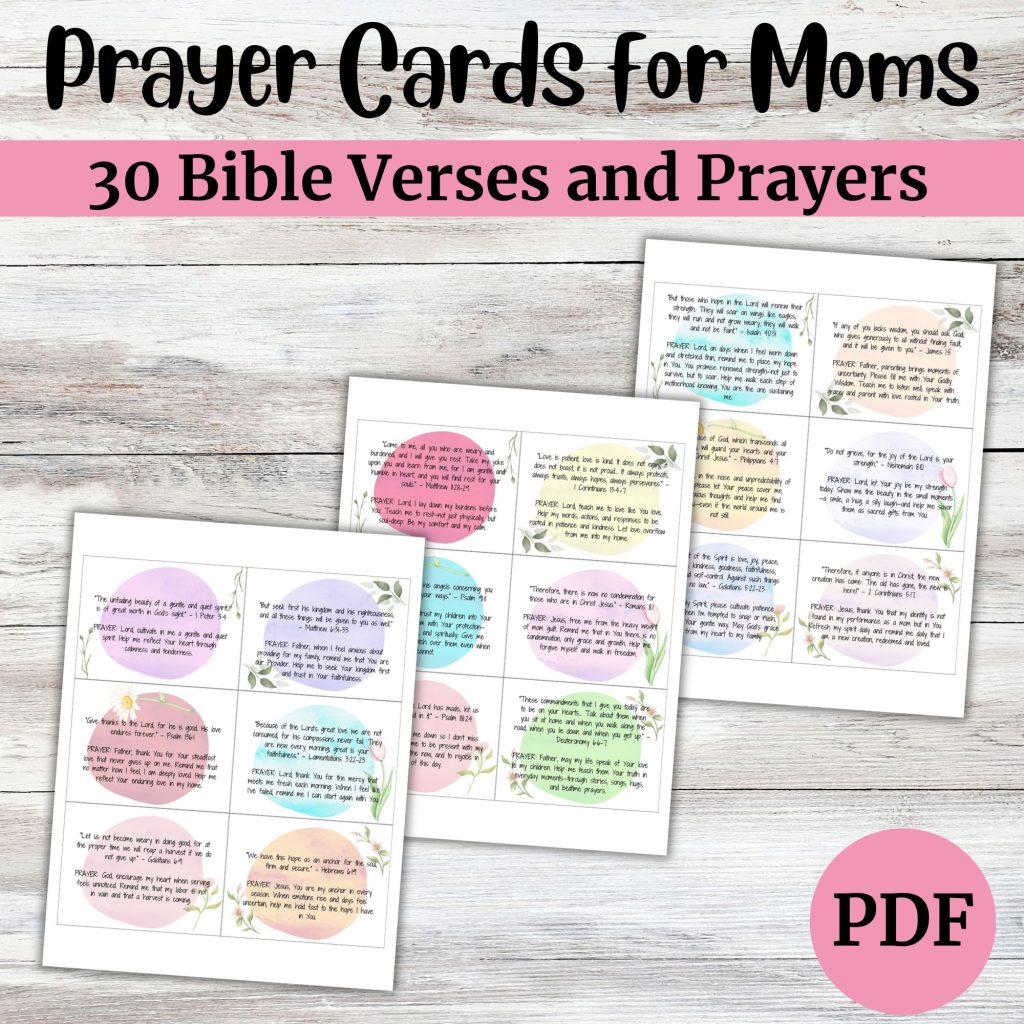
These Prayer Cards for Moms include a Bible verse and a prayer to uplift, encourage, and draw your heart closer to God—right when you need it most.
Whether you’re starting your day with quiet time, encouraging a friend, or tucking truth into your journal, these prayer cards—with Scripture on each one—will gently remind you of God’s presence, strength, and unending love in every season of motherhood.
Hidden Habits That Keep You Stuck in Discontent
Sometimes discontent looks responsible. It hides in “upgrade thinking.” Always improving. Always fixing. Always chasing the next version of life. It also hides in delayed joy.
The “I’ll Be Happy When” Trap
This sounds familiar:
- “I’ll be happy when the kids are older.”
- “I’ll be happy when we pay off debt.”
- “I’ll be happy when my house is clean.”
- “I’ll be happy when I feel better.”
- “I’ll be happy when my business grows.”
That script trains your heart to ignore today’s gifts. It turns the present into a waiting room.
Packed Schedules Can Crowd Out Peace
When every margin is gone, prayer becomes rushed. Rest becomes a luxury you feel you haven’t earned. Silence feels uncomfortable, so you fill it with noise.
Over time, the soul begins to feel dry. That is exactly what Jeremiah warns about. When we drift from God, we begin living off empty wells.
Finding True Contentment in God Starts With Who God Is
Contentment begins with a foundation that does not move.
God is present, not distant.
God is faithful, not unpredictable.
God is enough, even when life is not fixed yet.
Hebrews 13 reminds us that Jesus Christ is “the same yesterday, today, and forever” (Hebrews 13:8).
That truth stabilizes the heart. It means you are not building your peace on moods, money, relationships, or circumstances. You are building it on a Savior who does not change.
God Offers Satisfaction, Not Scraps
Psalm 81 contains one of the most tender invitations in Scripture. God says He wanted His people to listen so He could bless them. He even promises, “I would satisfy you with honey from the rock” (Psalm 81:16).
That is not a God who is stingy.
That is a God who wants to satisfy His children with what is good.
What Changes When God Becomes the Center of Your Day
When God becomes the center, things begin to shift. Sometimes slowly. Sometimes in surprising moments.
Your Identity Settles
You stop treating life like a performance review. You remember you are loved and held, even on days when you feel behind.
Your Desires Begin to Reorder
Good gifts become gifts again, not gods. Success, approval, comfort, and control lose their grip. You can still want things, but you are no longer owned by them.
Gratitude Becomes More Natural
Instead of constantly noticing what’s missing, you start noticing what God is doing. Even small gifts become reminders of His care.
10-Day Devotional: Embracing God’s Hope in Hard Times: A printable devotional for busy Christian women seeking hope, healing, and transformation through God’s Word.
With daily scriptures, prayers, and journaling prompts, you’ll renew your mind and refocus on Christ—no matter what season you’re in.
Grab your copy of”Embracing God’s hope in Hard Times” and start experiencing the peace and clarity you’ve been craving.

Practical Examples of Finding God in Everyday Life
Contentment grows when you start looking for God’s presence in real moments. Not perfect ones. Real ones.
At Work
When deadlines pile up, you can pause and ask for wisdom. Then do the next task with care.
At Home
Laundry can become a quiet prayer of love. Meals can become a thank-you instead of a burden.
In Relationships
When you feel overlooked, bring that honesty to God. When there is conflict, ask for courage to repair it.
In Fatigue and Health Struggles
Instead of demanding answers for the future, ask for grace for today. Psalm 81 reminds us that God fills hungry mouths. He gives strength for the moment.
Simple Daily Practices That Help You Grow in Contentment
Most women don’t need a perfect routine. They need a steady rhythm that fits real life. Contentment is built through small reps, not big emotional moments.
If you’ve tried habits before and quit, keep this gentle. Choose one small practice that you can do even on your hardest day. That’s how contentment becomes sustainable.
Gratitude With Honesty, Prayer That Releases Control, and Scripture That Resets the Heart
These three practices work well because they fit into everyday life.
Practice #1: Gratitude With Honest
Write three gifts from today.
Then add one honest sentence about what hurts. That keeps gratitude from becoming denial. It might sound like: “Thank You for a friend who checked on me. Today felt heavy. Please meet me here.”
Practice #2: A Short Prayer That Releases Control
When anxiety rises, try this simple prayer pattern:
- Tell God what’s true.
- Ask for help.
- Release control.
- Receive peace.
Even 30 seconds can reset your heart.
Practice #3: A Scripture Anchor for Restless Days
Choose one passage for the season.
Jeremiah 2:13 is a powerful one. It reminds you that broken cisterns will never satisfy. Only God can.
Psalm 81:10 is another beautiful anchor: “Open your mouth wide—I will fill it up.”
Write it on a sticky note. Put it on your mirror. Let it interrupt your day.
Three Stress Areas Where Contentment Gets Tested: Rest, Money, and Community
Some areas of life seem to challenge contentment more than others. These three are big ones.
Rest: Stop Treating Rest Like a Reward
Many women treat rest like something they have to earn. But rest is not a luxury. It is a gift.
Choose one small weekly block, even 30 minutes. Sit with a warm drink. Read a Psalm. Take a walk. Breathe. Let your body remember it is safe.
Money: Define “Enough” With Wisdom
Hebrews 13 warns us not to be ruled by the love of money (Hebrews 13:5). That does not mean money is evil. It means money cannot be your comfort.
If you want to grow in contentment, define “enough” with wisdom. Then reduce impulse triggers. Before you buy something, ask: “Am I trying to fix a feeling with a purchase?”
Community: Don’t Fight Discontent Alone
Discontent grows in isolation. Hebrews 13 encourages love, hospitality, and sharing (Hebrews 13:1–2, 16).
That is a reminder that contentment is often strengthened through community. Reach out to a trusted friend. Talk to your pastor. Join a Bible study.
A Humble Heart Helps Contentment Grow
One of the most overlooked roots of discontent is pride. Not the obvious kind. The quiet kind that says, “I have to be seen. I have to be impressive. I have to be enough.”
“But when you are invited, take the lowest place, so that when your host comes, he will say to you, ‘Friend, move up to a better place.’ Then you will be honored in the presence of all the other guests. For all those who exalt themselves will be humbled, and those who humble themselves will be exalted.” (Luke 14:10–11).
In these verses, Jesus is teaching something simple but powerful. He tells His followers to stop chasing the highest seat. Instead, choose humility and let honor come from God.
Contentment grows in a humble heart because humility stops striving. It rests in the truth that God sees you.
Finding True Contentment in God Is a Daily Return
True contentment is not perfect conditions. It is steady trust in a faithful God.
Jeremiah reminds us that everything else will eventually run dry. Psalm 81 reminds us God is ready to fill and satisfy. Hebrews 13 reminds us God will never leave. Luke 14 reminds us that humility leads to peace.
Your life may still be full. Your responsibilities may still be heavy. But your heart can begin to settle.
Choose one practice for the next seven days. Keep it simple. Keep it consistent. God meets people in everyday moments, laundry rooms and carpool lines included.
Where could you make a little space for Him today?
Interested in Bible Art Journaling?
Looking for a creative way to express your journey of loving God? Our “FREE Loved By God Bible Art Elements” offer beautiful and inspiring resources to enhance your Bible journaling experience. These elements are designed to help you visually celebrate and reflect on God’s love, adding a personal and artistic touch to your spiritual practice. Explore how these art elements can deepen your connection with God and enrich your study time.

You might enjoy these similar blog posts:
Embracing God’s Hope: 10 Scriptures for Hard Times
The Power of Prayer
Praying for Our Children
Praying When You’re Overwhelmed
Listening in Prayer